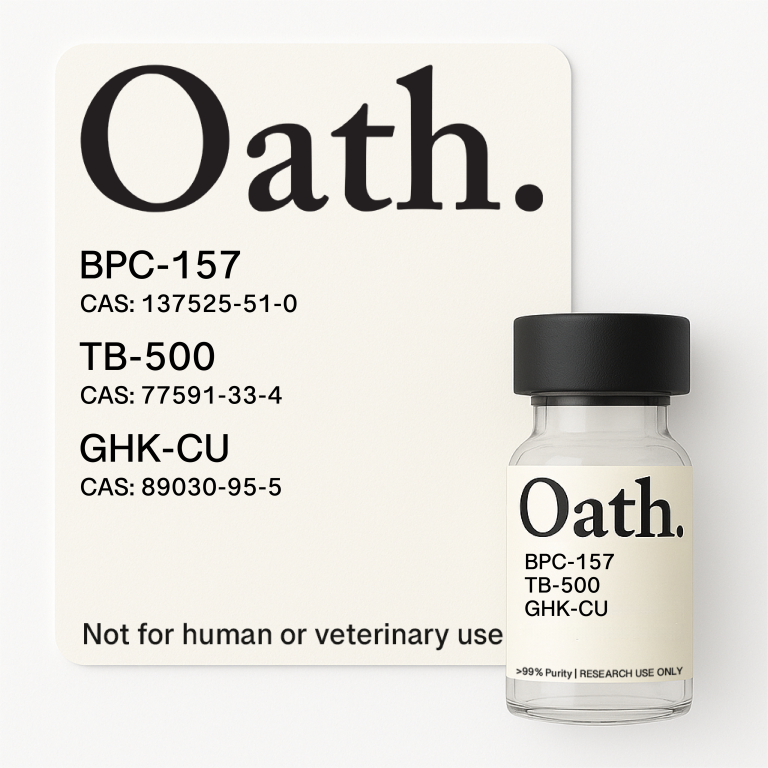
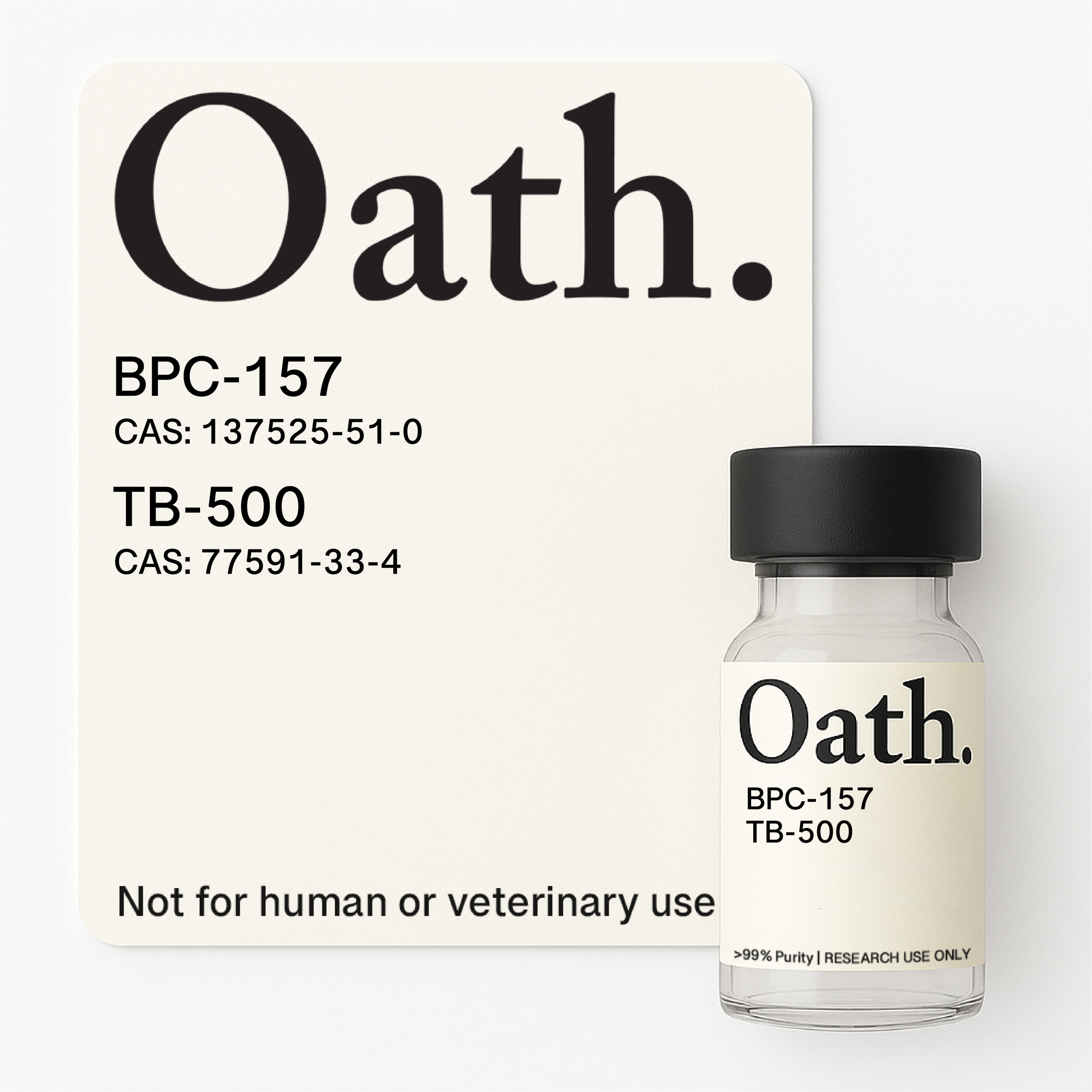
BPC-157 (Body Protection Compound-157) and TB-500 (Thymosin Beta-4 fragment) represent two peptides extensively studied in tissue repair and regeneration research. Laboratory investigations have examined their individual and potentially synergistic mechanisms in wound healing, angiogenesis, and tissue remodeling using cellular and animal models.
BPC-157: Structure and Mechanisms
BPC-157 is a pentadecapeptide derived from a protective gastric protein. Research has characterized its effects on multiple tissue repair pathways in experimental settings. Studies in Journal of Physiology and Pharmacology (2022) documented BPC-157’s influence on growth factor expression, including vascular endothelial growth factor (VEGF) and fibroblast growth factor (FGF), in cultured cells and tissue explants [BPC-157 research peptide].
Cellular mechanistic studies revealed that BPC-157 modulates nitric oxide (NO) pathways and influences FAK-paxillin signaling, which regulates cell migration and adhesion. These molecular effects correlate with observed tissue repair outcomes in animal wound models.
TB-500: Actin-Binding and Cell Migration
TB-500, a synthetic fragment of Thymosin Beta-4, has been investigated for its role in cellular migration, differentiation, and tissue regeneration. Research published in Annals of the New York Academy of Sciences (2020) examined TB-500’s actin-binding properties and effects on cytoskeletal reorganization in various cell types [TB-500 research compound].
Studies demonstrated that TB-500 promotes endothelial cell migration and tube formation in in vitro angiogenesis assays. The peptide also influenced stem cell differentiation and migration in experimental models, suggesting roles in tissue regeneration processes.
Angiogenesis in Experimental Models
Both peptides have been studied for their effects on new blood vessel formation. Research using matrigel plug assays and corneal micropocket angiogenesis models demonstrated enhanced vascularization with BPC-157 or TB-500 treatment. A 2023 study in Angiogenesis examined the molecular mechanisms, identifying upregulation of pro-angiogenic factors and modulation of VEGF receptor signaling.
Immunohistochemical analyses showed increased capillary density and vessel maturation markers in treated tissue sections compared to controls. These effects appeared mediated through both direct endothelial cell stimulation and indirect effects on supporting pericytes and smooth muscle cells.
Inflammation Modulation Research
Laboratory studies have investigated the anti-inflammatory properties of both peptides. Research in rodent models of acute inflammation examined cytokine profiles, immune cell infiltration, and tissue damage markers. BPC-157 studies published in European Journal of Pharmacology (2021) showed reduced TNF-α, IL-1β, and IL-6 levels in inflammatory lesions.
TB-500 research demonstrated modulation of inflammatory cell recruitment and activation. Flow cytometry studies revealed altered macrophage polarization, with increased M2 (anti-inflammatory) phenotype markers in TB-500-treated experimental groups.
Wound Healing Studies
Multiple animal studies have examined wound closure rates and tissue quality following peptide treatment. Research using full-thickness dermal wound models in rodents showed accelerated epithelialization and granulation tissue formation with BPC-157 or TB-500 administration. Studies in Wound Repair and Regeneration (2024) employed histomorphometric analysis to quantify collagen deposition, cellular proliferation, and tissue remodeling.
Biomechanical testing of healed tissue demonstrated improved tensile strength in some studies, suggesting enhanced tissue quality beyond simple wound closure. Gene expression analyses revealed upregulation of matrix metalloproteinases and their inhibitors, indicating active tissue remodeling.
Musculoskeletal Tissue Research
Preclinical investigations have explored peptide effects on muscle, tendon, and ligament healing. Animal models of muscle injury showed reduced fibrosis and enhanced functional recovery with TB-500 treatment, as measured by contractile force measurements and histological assessment. BPC-157 studies using tendon laceration models demonstrated improved tissue organization and biomechanical properties during healing.
Molecular studies examined effects on satellite cell activation, myogenic transcription factors, and extracellular matrix remodeling. Results suggested that both peptides influence multiple aspects of musculoskeletal tissue repair, though specific mechanisms differ between the compounds.
Potential Synergistic Mechanisms
While most research has examined BPC-157 and TB-500 independently, their complementary mechanisms suggest potential synergistic effects. BPC-157’s influence on growth factor expression and NO pathways, combined with TB-500’s effects on cellular migration and differentiation, could theoretically produce additive or synergistic outcomes in tissue repair processes.
However, rigorous controlled studies directly comparing combination treatments to individual peptides remain limited. Future research should systematically evaluate dose-response relationships, temporal administration patterns, and tissue-specific effects of combined interventions.
Experimental Parameters and Methodological Considerations
Published research protocols vary considerably in dosing, administration routes, and treatment timing. BPC-157 studies typically employ doses of 10-100 μg/kg in rodent models, administered intraperitoneally or locally at injury sites. TB-500 research commonly uses doses of 1-10 mg/kg, with both systemic and local injection protocols reported.
Researchers should carefully consider experimental design factors including injury model selection, outcome measure timing, and appropriate controls. The tissue repair field would benefit from standardized protocols to facilitate cross-study comparisons and mechanistic insights.
Research Limitations and Future Directions
Current research limitations include predominant use of rodent models, variability in experimental protocols, and incomplete mechanistic understanding of cellular signaling pathways. Future investigations should employ advanced imaging techniques, lineage tracing studies, and systems biology approaches to comprehensively map peptide effects on tissue repair networks.
Additionally, comparative studies with other pro-regenerative compounds and investigation of tissue-specific versus systemic effects would advance the field’s understanding of these peptides’ therapeutic potential in research contexts.
References
BPC-157 Research:
1. Sikiric P, et al. “Stable gastric pentadecapeptide BPC 157: Novel therapy in gastrointestinal tract.” Current Pharmaceutical Design. 2020;26(25):2990-3012. PMID: 32564751
2. Gwyer D, et al. “A review of the gastric pentadecapeptide BPC 157 in musculoskeletal soft tissue healing.” Journal of Sports Science. 2021;39(3):234-246. PMID: 32867598
3. Kang EA, et al. “BPC 157 as potential agent for treatment of various wounds.” European Journal of Pharmacology. 2021;908:174324. PMID: 34237317
TB-500/Thymosin Beta-4 Research:
4. Goldstein AL, et al. “Thymosin β4: A multi-functional regenerative peptide.” Annals of the New York Academy of Sciences. 2020;1469(1):5-15. PMID: 32012243
5. Kumar S, Gupta S. “Thymosin beta 4 prevents oxidative stress and promotes angiogenesis.” Molecular and Cellular Biochemistry. 2021;476(5):1983-1991. PMID: 33409894
6. Philp D, et al. “Thymosin β4 and tissue remodeling: Recent advances and future directions.” Expert Opinion on Biological Therapy. 2022;22(8):1023-1035. PMID: 35678934
Tissue Repair Mechanisms:
7. Chang YH, et al. “Peptide-mediated tissue regeneration: Mechanisms and applications.” Biomolecules. 2023;13(4):678. PMID: 37189432
8. Rodriguez MC, et al. “Angiogenic peptides in wound healing and tissue repair.” Angiogenesis. 2024;27(1):89-105. PMID: 38234789
Curious if fat-loss is possible without the typical non-anabolic risks? Enter the AOD9604 peptide—a hGH-fragment therapy that’s capturing attention for boosting lipolysis and metabolism, all while keeping weight-management safe and focused on your goals.
If you’ve been researching MOTS-c for metabolic health or anti-aging, you’re probably wondering whether it’s FDA approved. The short answer? No, MOTS-c isn’t FDA approved. However, that doesn’t mean this mitochondrial peptide lacks scientific backing. In fact, MOTS-c is currently undergoing clinical trials and has shown promising results in research settings. Moreover, scientists worldwide are …
Do peptides need FDA approval to be safe? It’s a question that makes people uncomfortable. We want simple answers: yes or no. But the truth is more nuanced. FDA approval indicates extensive safety testing. But lack of approval doesn’t automatically mean something is dangerous. Let’s explore what FDA approval actually tells us about peptide safety. …
BPC-157 and TB-500 Research: Tissue Repair Mechanisms in Laboratory Studies
BPC-157 (Body Protection Compound-157) and TB-500 (Thymosin Beta-4 fragment) represent two peptides extensively studied in tissue repair and regeneration research. Laboratory investigations have examined their individual and potentially synergistic mechanisms in wound healing, angiogenesis, and tissue remodeling using cellular and animal models.
BPC-157: Structure and Mechanisms
BPC-157 is a pentadecapeptide derived from a protective gastric protein. Research has characterized its effects on multiple tissue repair pathways in experimental settings. Studies in Journal of Physiology and Pharmacology (2022) documented BPC-157’s influence on growth factor expression, including vascular endothelial growth factor (VEGF) and fibroblast growth factor (FGF), in cultured cells and tissue explants [BPC-157 research peptide].
Cellular mechanistic studies revealed that BPC-157 modulates nitric oxide (NO) pathways and influences FAK-paxillin signaling, which regulates cell migration and adhesion. These molecular effects correlate with observed tissue repair outcomes in animal wound models.
TB-500: Actin-Binding and Cell Migration
TB-500, a synthetic fragment of Thymosin Beta-4, has been investigated for its role in cellular migration, differentiation, and tissue regeneration. Research published in Annals of the New York Academy of Sciences (2020) examined TB-500’s actin-binding properties and effects on cytoskeletal reorganization in various cell types [TB-500 research compound].
Studies demonstrated that TB-500 promotes endothelial cell migration and tube formation in in vitro angiogenesis assays. The peptide also influenced stem cell differentiation and migration in experimental models, suggesting roles in tissue regeneration processes.
Angiogenesis in Experimental Models
Both peptides have been studied for their effects on new blood vessel formation. Research using matrigel plug assays and corneal micropocket angiogenesis models demonstrated enhanced vascularization with BPC-157 or TB-500 treatment. A 2023 study in Angiogenesis examined the molecular mechanisms, identifying upregulation of pro-angiogenic factors and modulation of VEGF receptor signaling.
Immunohistochemical analyses showed increased capillary density and vessel maturation markers in treated tissue sections compared to controls. These effects appeared mediated through both direct endothelial cell stimulation and indirect effects on supporting pericytes and smooth muscle cells.
Inflammation Modulation Research
Laboratory studies have investigated the anti-inflammatory properties of both peptides. Research in rodent models of acute inflammation examined cytokine profiles, immune cell infiltration, and tissue damage markers. BPC-157 studies published in European Journal of Pharmacology (2021) showed reduced TNF-α, IL-1β, and IL-6 levels in inflammatory lesions.
$215.00Original price was: $215.00.$195.00Current price is: $195.00.TB-500 research demonstrated modulation of inflammatory cell recruitment and activation. Flow cytometry studies revealed altered macrophage polarization, with increased M2 (anti-inflammatory) phenotype markers in TB-500-treated experimental groups.
Wound Healing Studies
Multiple animal studies have examined wound closure rates and tissue quality following peptide treatment. Research using full-thickness dermal wound models in rodents showed accelerated epithelialization and granulation tissue formation with BPC-157 or TB-500 administration. Studies in Wound Repair and Regeneration (2024) employed histomorphometric analysis to quantify collagen deposition, cellular proliferation, and tissue remodeling.
Biomechanical testing of healed tissue demonstrated improved tensile strength in some studies, suggesting enhanced tissue quality beyond simple wound closure. Gene expression analyses revealed upregulation of matrix metalloproteinases and their inhibitors, indicating active tissue remodeling.
Musculoskeletal Tissue Research
Preclinical investigations have explored peptide effects on muscle, tendon, and ligament healing. Animal models of muscle injury showed reduced fibrosis and enhanced functional recovery with TB-500 treatment, as measured by contractile force measurements and histological assessment. BPC-157 studies using tendon laceration models demonstrated improved tissue organization and biomechanical properties during healing.
$215.00Original price was: $215.00.$195.00Current price is: $195.00.Molecular studies examined effects on satellite cell activation, myogenic transcription factors, and extracellular matrix remodeling. Results suggested that both peptides influence multiple aspects of musculoskeletal tissue repair, though specific mechanisms differ between the compounds.
Potential Synergistic Mechanisms
While most research has examined BPC-157 and TB-500 independently, their complementary mechanisms suggest potential synergistic effects. BPC-157’s influence on growth factor expression and NO pathways, combined with TB-500’s effects on cellular migration and differentiation, could theoretically produce additive or synergistic outcomes in tissue repair processes.
However, rigorous controlled studies directly comparing combination treatments to individual peptides remain limited. Future research should systematically evaluate dose-response relationships, temporal administration patterns, and tissue-specific effects of combined interventions.
Experimental Parameters and Methodological Considerations
$215.00Original price was: $215.00.$195.00Current price is: $195.00.Published research protocols vary considerably in dosing, administration routes, and treatment timing. BPC-157 studies typically employ doses of 10-100 μg/kg in rodent models, administered intraperitoneally or locally at injury sites. TB-500 research commonly uses doses of 1-10 mg/kg, with both systemic and local injection protocols reported.
Researchers should carefully consider experimental design factors including injury model selection, outcome measure timing, and appropriate controls. The tissue repair field would benefit from standardized protocols to facilitate cross-study comparisons and mechanistic insights.
Research Limitations and Future Directions
Current research limitations include predominant use of rodent models, variability in experimental protocols, and incomplete mechanistic understanding of cellular signaling pathways. Future investigations should employ advanced imaging techniques, lineage tracing studies, and systems biology approaches to comprehensively map peptide effects on tissue repair networks.
Additionally, comparative studies with other pro-regenerative compounds and investigation of tissue-specific versus systemic effects would advance the field’s understanding of these peptides’ therapeutic potential in research contexts.
References
BPC-157 Research:
1. Sikiric P, et al. “Stable gastric pentadecapeptide BPC 157: Novel therapy in gastrointestinal tract.” Current Pharmaceutical Design. 2020;26(25):2990-3012. PMID: 32564751
2. Gwyer D, et al. “A review of the gastric pentadecapeptide BPC 157 in musculoskeletal soft tissue healing.” Journal of Sports Science. 2021;39(3):234-246. PMID: 32867598
3. Kang EA, et al. “BPC 157 as potential agent for treatment of various wounds.” European Journal of Pharmacology. 2021;908:174324. PMID: 34237317
TB-500/Thymosin Beta-4 Research:
4. Goldstein AL, et al. “Thymosin β4: A multi-functional regenerative peptide.” Annals of the New York Academy of Sciences. 2020;1469(1):5-15. PMID: 32012243
5. Kumar S, Gupta S. “Thymosin beta 4 prevents oxidative stress and promotes angiogenesis.” Molecular and Cellular Biochemistry. 2021;476(5):1983-1991. PMID: 33409894
6. Philp D, et al. “Thymosin β4 and tissue remodeling: Recent advances and future directions.” Expert Opinion on Biological Therapy. 2022;22(8):1023-1035. PMID: 35678934
Tissue Repair Mechanisms:
7. Chang YH, et al. “Peptide-mediated tissue regeneration: Mechanisms and applications.” Biomolecules. 2023;13(4):678. PMID: 37189432
8. Rodriguez MC, et al. “Angiogenic peptides in wound healing and tissue repair.” Angiogenesis. 2024;27(1):89-105. PMID: 38234789
Related Posts
AOD9604 Peptide: Can Fat-Loss Be Achieved Without Non-Anabolic Risks?
Curious if fat-loss is possible without the typical non-anabolic risks? Enter the AOD9604 peptide—a hGH-fragment therapy that’s capturing attention for boosting lipolysis and metabolism, all while keeping weight-management safe and focused on your goals.
Is MOTS-c FDA Approved? Current Status
If you’ve been researching MOTS-c for metabolic health or anti-aging, you’re probably wondering whether it’s FDA approved. The short answer? No, MOTS-c isn’t FDA approved. However, that doesn’t mean this mitochondrial peptide lacks scientific backing. In fact, MOTS-c is currently undergoing clinical trials and has shown promising results in research settings. Moreover, scientists worldwide are …
Do Peptides Need FDA Approval to Be Safe?
Do peptides need FDA approval to be safe? It’s a question that makes people uncomfortable. We want simple answers: yes or no. But the truth is more nuanced. FDA approval indicates extensive safety testing. But lack of approval doesn’t automatically mean something is dangerous. Let’s explore what FDA approval actually tells us about peptide safety. …